
Band
Unknown Artist
10th–11th century
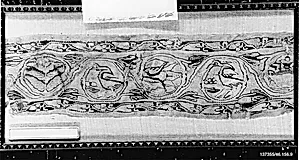
Medium
Linen and silk
Dimensions
H. 3 3/4 in. (9.5 cm) W. 9 1/2 in. (24.1 cm)
Classification
Textiles-Woven
Department
Islamic Art
Museum
Metropolitan Museum of Art, New York, NY
Credit
Fletcher Fund, 1946
Accession Number
46.156.9
Rights
Public Domain
Art Historical Context
This exquisite woven band, crafted from linen and silk in the th–11th century offers a glimpse into the refined artistry of the Islamic world. Measuring just 3¾ inches high and 9½ inches, its narrow form suggests it was likely used as a decorative trim for garments, furnishings, or ceremonial textiles—a common feature in Abbasid or regional Islamic production centers like Egypt or Iraq. The Fletcher Fund acquisition in 1946 brought this delicate piece to the Metropolitan Museum Art's Department of Islamic Art, where it stands as a testament to medieval textile mastery. The use of silk alongside linen highlights the period's advanced weaving techniques, where luxurious fibers were intertwined to create durable yet opulent fabrics. Silk, often imported via the Silk Road, symbolized wealth and status, frequently reserved for elite patronage. Woven textiles like this band were not merely functional; they embodied cultural prestige, showcasing intricate patterns (though specifics here are preserved in their subtle weave) that reflected Islamic geometric and vegetal motifs. As a survivor from over a millennium ago, this anonymous artist's work underscores the Islamic tradition's emphasis on craftsmanship over individual fame. Visitors can appreciate how such bands bridged art, trade, and daily life, preserving the vibrancy of a golden age in textile innovation.