
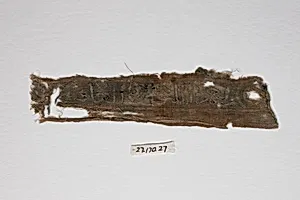
Band Fragment
Unknown Artist
13th–14th century
Medium
Cotton; formerly embroidered
Dimensions
L. 1 3/8 in. (3.5 cm) W. 6 in. (15.2 cm)
Classification
Textiles-Embroidered
Department
Islamic Art
Museum
Metropolitan Museum of Art, New York, NY
Credit
Rogers Fund, 1927
Accession Number
27.170.27
Rights
Public Domain
Art Historical Context
This exquisite Band Fragment, dating to the 13th–14th century, a glimpse into the refined world of Islamic textile arts. Housed in the Metropolitan Museum of Art's Department Islamic Art, this narrow cotton strip—measuring just 1 3/8 inches long and 6 inches wide—was once vibrantly embroidered, a testament to the skilled craftsmanship of anonymous artisans in the medieval Islamic world. During this era, textiles were not merely functional but symbols of wealth, piety, and cultural exchange,ning garments, turbans, and household goods across regions from Egypt to Persia. The use of cotton as a base medium highlights its accessibility and versatility in Islamic production centers, where embroidery techniques elevated everyday fabrics into works of art. Though now a modest fragment—likely preserved through careful excavation or collection—this piece reflects the durability and intricate detailing prized in the period. Embroiderers employed fine stitches to create patterns that blended utility with beauty, often incorporating motifs symbolic of paradise gardens or protective talismans. Acquired through the Rogers Fund in 1927, this survivor invites us to appreciate the fragility of history. In a virtual museum tour, it reminds visitors of the Islamic tradition's profound influence on global decorative arts, where even small remnants whisper stories of innovation and devotion.