
Bangle Bracelet
ca. 1875
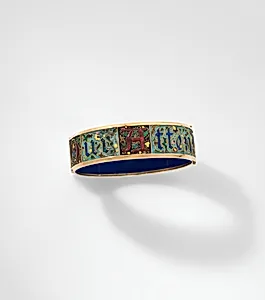
Medium
Gold, cloisonné enamel
Dimensions
11/16 × 2 7/16 × 2 1/4 in. (1.7 × 6.2 × 5.7 cm)
Classification
Jewelry|Metalwork-Gold and Platinum
Culture
French, Paris
Department
European Sculpture and Decorative Arts
Museum
Metropolitan Museum of Art, New York, NY
Credit
Gift of Albion Art Co. Ltd., 2018
Accession Number
2018.447.3
Rights
Public Domain
Art Historical Context
This exquisite Bangle Bracelet, around 1875 by the renowned French jeweler Alexis Falize and his son, exemplifies the opulent jewelry of Second Empire Paris. Made of gold adorned with cloisonné enamel—a technique involving thin metal wires that form cells filled with vibrant, fired glass enamel—the bracelet measures a delicate 11/16 × 2 7/16 × 2 1/4 inches. Housed in the Metropolitan Museum of Art's European and Decorative Arts department, it was a generous gift from Albion Art Co. Ltd. in 2018. The Falizes were masters of reviving historic enameling methods, blending Renaissance-inspired precision with emerging Japoniste influences popular in late 19th-century France. Cloisonné enamel, with its luminous colors trapped in gold cells, created jewel-like patterns that mimicked paintings on metal, elevating jewelry from mere adornment to wearable art. This piece reflects the era's fascination with intricate metalwork, where gold's malleability allowed for bold, sculptural forms. Worn on the wrist, such bangles symbolized elegance and status among Parisian elites, bridging decorative arts and high fashion. Today, it invites visitors to appreciate the technical virtuosity and cultural fusion that defined French luxury craftsmanship.