
Banjo
ca. 1859
Medium
Metal, wood
Dimensions
96cm x 34cm x 10cm
Classification
Chordophone-Lute-plucked
Culture
American
Department
Musical Instruments
Museum
Metropolitan Museum of Art, New York, NY
Credit
The Crosby Brown Collection of Musical Instruments, 1889
Accession Number
89.4.2676
Rights
Public Domain
Art Historical Context
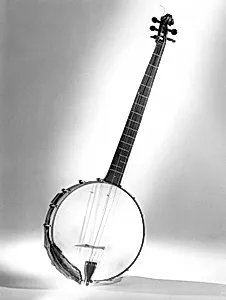
Step into the rhythmic world of 19th-century American music with *Banjo*, crafted by Hercules McCord around 9. This striking chordophone-lute-plucked instrument, tall at 96 cm high, 34 cm wide, and 10 cm deep, showcases masterful woodworking and metalwork. Its construction reflects the banjo's evolution as a beloved American folk instrument, with a taut skin head stretched over a wooden frame and strings plucked to produce its signature twang. Made in the United States during the turbulent pre-Civil War era, McCord's banjo embodies the cultural fusion of African and European traditions that defined early American music. Banjos like this fueled minstrel shows, plantation dances, and emerging folk traditions, carrying stories of joy and resilience across communities. The use of humble materials—metal for hardware and wood for the body—highlights skilled artisanal techniques, where precision ensured rich tonal resonance. Today, this piece graces the Metropolitan Museum of Art's Crosby Brown Collection of Musical Instruments, acquired in 1889. It invites visitors to appreciate not just its form, but the vibrant sounds and histories it evokes, bridging craft, culture, and performance in America's musical heritage.