
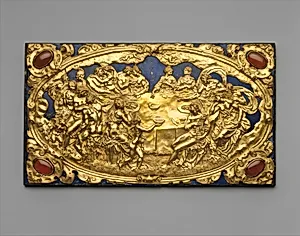
Banquet of the Gods
Medium
Gold, lapis lazuli, carnelian
Dimensions
Overall: 9 5/8 × 5 1/2 in. (24.4 × 14 cm)
Classification
Metalwork-Gold and Platinum
Culture
Italian, Rome
Department
European Sculpture and Decorative Arts
Museum
Metropolitan Museum of Art, New York, NY
Credit
Rogers Fund, 1912
Accession Number
12.135.5
Rights
Public Domain
Tags
Art Historical Context
Behold the *Banquet of the Gods a exquisite late Renaissance masterpiece crafted after 1585 by Italian artists Antonio Gentili (also as Antonio da Faenza and Guglielmo Porta in Rome. This diminutive treasure, measuring just 9⅝ × 5½ inches, is fashioned from gleaming gold inlaid with vibrant lapis lazuli andnelian—precious materials that evoke the opulence of ancient mythology reimagined for elite patrons. Depicting a lively feast of deities amid male and female nudes, it captures the era's fascination with classical banquets, blending revelry and divine nudity in intricate metalwork. Housed in the Metropolitan Museum of Art's European Sculpture and Decorative Arts department (acquired via the Rogers Fund in 1912), this piece exemplifies Mannerist goldsmithing from papal Rome. Gentili, a skilled goldsmith from Faenza, collaborated with the sculptor Guglielmo della Porta, whose dynamic figures reflect influences from Michelangelo. The use of hardstone inlays highlights virtuoso techniques like chasing and enameling, reserved for the wealthiest collectors, symbolizing power and erudition during the Counter-Reformation's cultural splendor. As a rare survivor of sumptuous 16th-century metalwork, *Banquet of the Gods* invites us to savor the Renaissance revival of pagan joys, where artistry met extravagance in miniature splendor.