
Barbe
Unknown Artist
last quarter 18th century
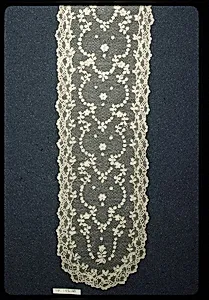
Medium
Needle lace, point d’Alençon
Dimensions
L. 56 x W. 4 1/4 inches 142.2 x 10.8 cm
Classification
Textiles-Laces
Culture
French
Department
European Sculpture and Decorative Arts
Museum
Metropolitan Museum of Art, New York, NY
Credit
Henrietta Seligman Lace Collection, Bequest of Mrs. Jesse Seligman, 1910
Accession Number
10.102.99
Rights
Public Domain
Art Historical Context
Step into the opulent world of 18th-century French fashion *Barbe*, a exquisite needle lace piece crafted in the point d’Alençon technique during the quarter of the 1700s. Measuring an elegant 56 inches long by 4¼ inches wide, this delicate accessory—likely a flowing neckpiece or collar—exemplifies the pinnacle of lace artistry from Alençon, a town renowned for its royal workshops. Produced by an unknown master artisan, it reflects the era's lavish decorative arts, when such textiles adorned the elite, from aristocrats to Marie Antoinette herself. Point d’Alençon lace, often called the "Queen of Laces," is made entirely by hand using a needle and single thread, creating intricate floral motifs and geometric patterns with lifelike transparency and depth. This labor-intensive method, protected by strict guilds, demanded years of training and symbolized unparalleled luxury amid the pre-Revolutionary splendor of Versailles. Worn as a *barbe*—a soft, draped fichu or ruffle—it added graceful femininity to gowns, blending functionality with high artistry. Now part of the Metropolitan Museum of Art’s European Sculpture and Decorative Arts collection, *Barbe* entered through the Henrietta Seligman Lace Collection, bequeathed in 1910. It invites us to appreciate the unseen hands behind fashion's finest details, a testament to French cultural heritage.