
Barber's Apron
Unknown Artist
late 18th century
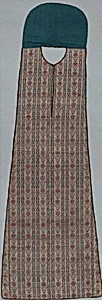
Medium
Silk, metal-thread; weft-faced compound plain weave
Dimensions
H. 58 in. (147.3 cm) W. 23 in. (58.4 cm)
Classification
Textiles
Department
Islamic Art
Museum
Metropolitan Museum of Art, New York, NY
Credit
Purchase, Friends of Islamic Art Gifts, 2013
Accession Number
2013.1144
Rights
Public Domain
Art Historical Context
Step into the vibrant world of late 18th-century Islamic with this striking *Barber's Apron*, a functional yet luxurious textile now housed in the Metropolitan Museum of Art's of Islamic Art. Measuring an impressive 58 inches high by 23 inches wide, was crafted from silk and metal-thread using a sophisticated weft-faced compound plain weave technique that creates a rich, durable surface ideal for both protection and display. Acquired through the Friends of Islamic Art Gifts in 2013, this piece exemplifies the everyday artistry of the period. In Islamic societies, particularly during the Ottoman era, barbershops were lively social hubs where grooming intertwined with community life. Barbers wore elaborate aprons like this one not just to shield their clothes from clippings and soapsuds, but as symbols of status and skill. The use of shimmering metal threads alongside fine silk elevated these garments into wearable treasures, blending utility with opulence. This apron's preservation highlights the mastery of Islamic textile traditions, where intricate weaves produced textures that caught the light and eye alike. Though the artist remains unknown, the work invites us to appreciate how even humble professions inspired extraordinary design, bridging the practical and the poetic in daily life. (198 words)