
Bartholomeus Spranger
Medium
Engraving; seventh state of seven
Dimensions
10 1/4 x 7 5/16 in. (26 x 18.5 cm)
Classification
Prints
Department
Drawings and Prints
Museum
Metropolitan Museum of Art, New York, NY
Credit
Harris Brisbane Dick Fund, 1917
Accession Number
17.3.756-644
Rights
Public Domain
Tags
Art Historical Context
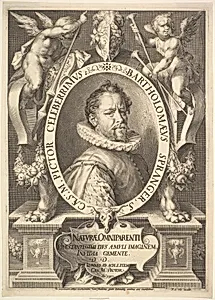
This striking engraving from around 1618 presents a portrait of the Flemish painter Bartholomeus Spranger, surrounded by playful putti that evoke themes of artistic inspiration and creative vitality. Created through the meticulous process of engraving—a technique prized in the early seventeenth century for its ability to produce fine lines and rich tonal contrasts—the print exists in its seventh and final state, reflecting the careful refinements made to the copper plate over time. Measuring just over ten inches tall, it exemplifies how reproductive prints helped spread the fame of leading artists across Europe. The work brings together contributions from several notable figures, including Hans von Aachen and Jan Muller, both closely tied to the sophisticated court culture of Prague under Emperor Rudolf II. Spranger himself, a central figure in Northern Mannerism, was celebrated for his elegant, elongated figures and mythological subjects. By featuring him alongside cherubic attendants, the engraving celebrates not only the man but also the intellectual prestige of painting during this period. Such portraits served an important cultural role, allowing collectors and scholars to own images of celebrated artists. Today, this impression in the Metropolitan Museum’s collection offers a window into the collaborative world of printmaking and the enduring appeal of Mannerist elegance.