
Bas-Relief, I
1918
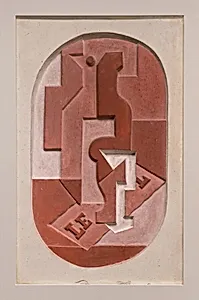
Medium
polychromed stone
Dimensions
overall: 55.7 x 35.7 x 4.4 cm (21 15/16 x 14 1/16 x 1 3/4 in.)
Classification
Sculpture
Department
CMC
Museum
National Gallery of Art, Washington, D.C.
Credit
Adolph Caspar Miller Fund
Accession Number
1977.29.1
Rights
Public Domain
Art Historical Context
Jacques Lipchitz's *Bas-Relief, I* (1918) is a striking example of early 20th-century modernist sculpture, crafted from polychromed stone—a technique where color is applied to the carved surface, evoking ancient traditions while embracing avant-garde experimentation. Measuring 55.7 x 35.7 x 4.4 cm, this low-relief work invites viewers to explore its shallow depth, where forms emerge subtly from the stone, blending sculpture with painting for a dynamic visual effect. Lipchitz, a Lithuanian-born artist active in Paris, was a pioneer of Cubism in three dimensions, influenced by contemporaries like Picasso and Gris. Created at the close of World War I, *Bas-Relief, I* captures the era's fractured energy through angular, abstracted shapes that defy traditional perspective, fragmenting space and figure into geometric planes. The polychromy heightens this innovation, infusing the stone with vivid hues that challenge the monochrome norms of classical reliefs. Housed in the National Gallery of Art through the Adolph Caspar Miller Fund, this piece exemplifies Lipchitz's pivotal role in evolving Cubist sculpture toward emotional depth. It reminds us how artists transformed war's turmoil into bold, colorful abstraction, offering timeless insights into form and perception.