
Basilard
Unknown Artist
ca. 1540
Medium
Steel, wood, gold
Dimensions
L. 12 1/2 in. (31.8 cm); W. 3 1/4 (8.3 cm); Wt. 5.2 oz. (147.4 g)
Classification
Daggers
Culture
Italian
Department
Arms and Armor
Museum
Metropolitan Museum of Art, New York, NY
Credit
Rogers Fund, 1904
Accession Number
04.3.141
Rights
Public Domain
Tags
Art Historical Context
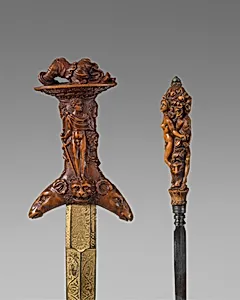
This exquisite basilard dagger, crafted in Italy around 1540, exemplifies the Renaissance fusion of lethal utility and artistic splendor. Measuring 12½ inches in length and weighing just 5.2 ounces, it is forged from steel with wooden grips inlaid or accented in gold, making it both a formidable weapon and a collector's treasure. Housed in the Metropolitan Museum of Art's Arms and Armor Department (acquired via the Rogers Fund in 1904), basilards like this were short swords or daggers favored by civilians and nobility for personal defense during an era of political intrigue and warfare in Renaissance Italy. The dagger's hilt and blade feature intricate engravings depicting biblical scenes from David and Goliath, roaring lions, and dynamic male nudes—motifs that reflect the period's fascination with classical antiquity, heroism, and the human form. These gold-enhanced details transform a tool of combat into a canvas for storytelling, showcasing the goldsmith's mastery in fine-line etching and gilding techniques on steel. Historically, such ornate arms symbolized status among Italian elites, blending martial prowess with cultural patronage. This piece invites us to ponder how Renaissance artisans elevated everyday objects into symbols of power, faith, and beauty.