
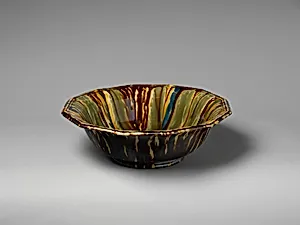
Basin
1849–58
Medium
Mottled brown earthenware
Dimensions
H. 4 3/4 in. (12.1 cm); Diam. 15 in. (38.1 cm)
Classification
Basin
Culture
American
Department
The American Wing
Museum
Metropolitan Museum of Art, New York, NY
Credit
Rogers Fund, 1918
Accession Number
18.95.5
Rights
Public Domain
Art Historical Context
This elegant basin, crafted by Lyman, Fenton & Co. 1849 and 1858, exemplifies mid-19th-century American. Produced at the Bennington Pottery in Vermont—one of the era's leading manufacturers—the piece is made of mottled brown earthenware, a durable, low-fired clay body often finished with a distinctive Rockingham glaze. This glaze, flecked with manganese for its signature tortoiseshell mottling, created an affordable yet visually striking surface that mimicked high-end English wares. Measuring 4 3/4 inches high and 15 inches in diameter, it was designed for practical use, such as hand-washing or as a decorative washstand element in Victorian households. Lyman, Fenton & Co. played a pivotal role in America's burgeoning industrial ceramics scene, adopting steam-powered machinery and molds to mass-produce items for everyday life. Rockingham ware like this basin democratized style, bringing warmth and texture to middle-class homes during the antebellum period. Its earthy tones and subtle imperfections highlight the handmade quality amid mechanization. Today, housed in The Metropolitan Museum of Art's American Wing (Rogers Fund, 1918), this basin offers a tangible glimpse into domestic life, underscoring how American potters innovated to rival European imports while embracing functionality and folk artistry.