
Basin
Unknown Artist
19th century
Medium
Silver; partially gilded
Dimensions
H. 6 1/2 in. (16.5 cm) Max. Diam. 11 in. (27.9 cm)
Classification
Metal
Department
Islamic Art
Museum
Metropolitan Museum of Art, New York, NY
Credit
Rogers Fund, 1908
Accession Number
08.57.2a, b
Rights
Public Domain
Tags
Art Historical Context
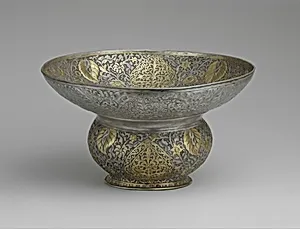
Nestled in the Metropolitan Museum of Art's Islamic collection, this elegant 19th-century basin exemplifies the refined metalworking traditions of the Islamic world. Craft from silver and partially gilded, it measures 6½ inches high and 11 inches in diameter, making it a practical yet luxurious vessel—likely used for washing hands or ritual ablutions in a household or ceremonial setting. The subtle gilding, where thin gold leaf is applied to enhance the silver's gleam, adds a touch of opulence, the era's appreciation for precious materials that symbolized wealth and piety. The basin's design, hinted at by motifs of leaves, draws on nature-inspired ornamentation common in Islamic art, evoking abundance and the garden paradise central to Islamic cosmology. Artisans employed skilled techniques like repoussé (hammering from the reverse to create relief) and chasing (incised detailing), transforming functional metalwork into sculptural beauty. Acquired through the Rogers Fund in 1908, this anonymous masterpiece highlights how 19th-century Islamic craftsmen blended utility with artistry, bridging everyday life and spiritual symbolism for viewers today.