
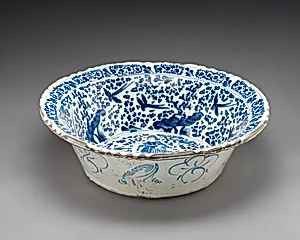
Basin
1660–80
Medium
Tin-glazed earthenware
Dimensions
H. 6 1/2 in. (16.5 cm); Diam. 20 1/4 in. (51.4 cm)
Classification
Basin
Culture
Mexican
Department
The American Wing
Museum
Metropolitan Museum of Art, New York, NY
Credit
Gift of Mrs. Robert W. de Forest, 1911
Accession Number
11.87.3
Rights
Public Domain
Tags
Art Historical Context
This exquisite basin, crafted by Mexican potter Damián Hernández 1660 and 1680, exemplifies the vibrant tradition of tin-glazed earthenware from Puebla. Measuring 6½ inches high and an impressive 20¼ inches in diameter, this wide, shallow vessel was used for washing or as a decorative centerpiece. The tin glaze technique—introduced by Spanish artisans in the 16th century—created a smooth, opaque white surface ideal for bold polychrome decorations, often featuring lively figures of women amid floral motifs, blending European maiolica methods with indigenous Mexican aesthetics. Produced during Mexico's viceregal period, the basin reflects the cultural fusion of New Spain, where Talavera pottery workshops thrived in Puebla, exporting wares across the Americas. Hernández, a master of this craft, contributed to a golden age of ceramics that symbolized prosperity and piety in colonial households. Its presence in The Metropolitan Museum of Art's American Wing highlights the interconnected histories of the Spanish colonies and early American art. A gift to the museum in 1911, this piece invites us to appreciate how everyday objects became canvases for storytelling, capturing the grace and daily life of 17th-century Mexican women in enduring clay.