
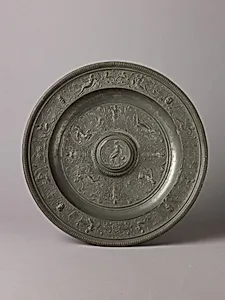
Basin (so-called Temperance Dish)
(model), Montbéliard, late 16th century
Medium
Pewter
Dimensions
D. 45 cm
Classification
Metalwork
Department
Robert Lehman Collection
Museum
Metropolitan Museum of Art, New York, NY
Credit
Robert Lehman Collection, 1975
Accession Number
1975.1.1472
Rights
Public Domain
Art Historical Context
This elegant pewter basin, known as the "Temperance," was crafted by François Briot a master pewterer from Montbéliard, France in the late 16th century. Measuring 45 cm in diameter, it exemplifies the height of Renaissance metalwork, where functional objects like basins doubled as display pieces for the prosperous middle and upper classes. Briot part of a renowned family of pewter artisans, produced works that blended utility with intricate decoration, making pewter—a durable alloy of tin and lead—a favored medium for tableware during this era. The basin's nickname hints at allegorical motifs, likely symbolizing temperance, a key Renaissance virtue often depicted in art to promote moral balance amid the period's social upheavals, including religious wars in France. Montbéliard's strategic location near the Swiss border fostered a vibrant workshop culture, where Briot innovated casting techniques for raised reliefs and embossed designs, elevating pewter from everyday use to sculptural art. Housed in the Robert Lehman Collection at The Metropolitan Museum of Art since 1975, this piece showcases the artistic ingenuity of Protestant Europe's metalworkers, bridging craftsmanship and cultural symbolism in a time when such objects graced noble banquets and conveyed status.