
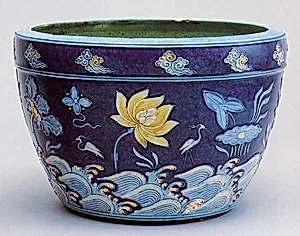
明中期 景德鎮窯法華蓮池水禽紋缸|Basin with lotus pond
Unknown Artist
late 15th century
Medium
Porcelain with raised slip and enamels (Jingdezhen fahua ware)
Dimensions
H. 7 3/8 in. (18.7 cm); Diam. 11 1/4 in. (28.6 cm) Diam. of rim: 11 1/4 in. (28.6 cm) Diam. of foot: 7 in. (17.8 cm)
Classification
Ceramics
Culture & Period
China · Ming dynasty (1368–1644)
Department
Asian Art
Museum
Metropolitan Museum of Art, New York, NY
Credit
Bequest of John D. Rockefeller Jr., 1960
Accession Number
61.200.4
Rights
Public Domain
Tags
Art Historical Context
This elegant porcelain basin, created in the late 15th century during the Ming dynasty, exemplifies the refined ceramic traditions of Jingdezhen, China’s premier porcelain center. Produced using the distinctive fahua technique, the vessel features raised slip outlines filled with vibrant enamels, creating a textured, jewel-like surface that highlights the lotus pond scene. Such wares were prized for their bold color contrasts and were often intended for scholarly or elite households, reflecting the period’s appreciation for nature-inspired designs. The decoration of lotuses and water birds evokes themes of purity, renewal, and harmonious coexistence with the natural world—motifs deeply rooted in Chinese culture. Lotuses, rising pristine from muddy waters, symbolized moral integrity, while birds added a sense of lively tranquility to the composition. As a functional yet decorative object, this basin demonstrates how Ming artisans blended technical innovation with poetic imagery, transforming everyday vessels into works of art that continue to captivate viewers today.