
Basket
ca. 1760
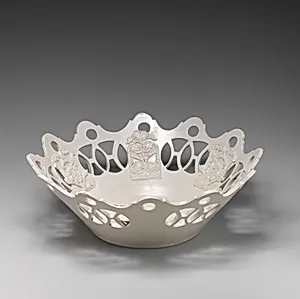
Medium
Salt-glazed stoneware
Dimensions
3 1/4 × 9 1/2 in. (8.3 × 24.1 cm)
Classification
Ceramics-Pottery
Culture
possibly British, Shelton, Staffordshire
Department
European Sculpture and Decorative Arts
Museum
Metropolitan Museum of Art, New York, NY
Credit
Gift of Carleton Macy, 1934
Accession Number
34.165.68
Rights
Public Domain
Art Historical Context
This delicate salt-glazed stonewareBasket*, crafted around 1760 by Ralph and John Baddeley— father and son potters from Shelton, Staffordshire—is a charming example of 18th-century British ceramics Measuring just 3¼ × 9½ inches, its modest scale belies the technical prowess required to shape it into a realistic basket form, evoking woven textures of wickerwork through molded clay. Now housed in the Metropolitan Museum of Art's Department of European Sculpture and Decor Arts, it was generously gifted by Carleton Macy in 1934. Salt-glazing, the defining technique here, involved introducing salt vapors into the kiln at high temperatures, creating a durable, glossy finish prized for its resistance to chipping and impermeability. Staffordshire potters like the Baddeleys excelled in this method during the mid-1700s, bridging utilitarian pottery and decorative luxury amid the region's booming ceramics industry. This piece reflects that era's innovation, where everyday objects gained artistic flair. Culturally, such baskets served both practical and ornamental roles in British households, symbolizing the fusion of craft tradition and emerging industrial refinement. A testament to Shelton's pottery heritage, it invites us to appreciate the tactile artistry of ceramics that once graced tabletops across Europe.
About the Artist
Ralph Baddeley|John Baddeley ( | ) · 1700 |1700 –1800 |1800
|