
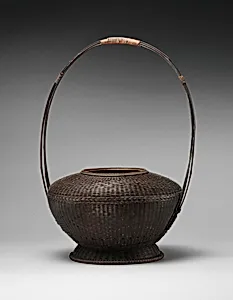
牡丹花籃|Basket for Peonies
Unknown Artist
second half of the 19th century
Medium
Bamboo, rattan
Dimensions
H. 24 in. (61 cm); Diam. 14 1/2 in. (36.8 cm)
Classification
Basketry
Culture & Period
Japan · Meiji period (1868–1912)
Department
Asian Art
Museum
Metropolitan Museum of Art, New York, NY
Credit
Edward C. Moore Collection, Bequest of Edward C. Moore, 1891
Accession Number
91.1.2070
Rights
Public Domain
Art Historical Context
This exquisite *Basket for Peonies*牡丹花籃), crafted in the second half of the19th century during Japan's Meiji period (186–1912), exemplifies refined artistry of traditional basketry. Made from intricately woven bamboo and r, it stands 24 inches (61 cm) tall with a 14½-inch (36.8 cm), its graceful form perfectly suited for displaying peonies—symbolizing wealth, honor, and fortune in Japanese culture. baskets were essential for ikebana, the meditative art of flower arrangement, blending utility with aesthetic harmony. During the Meiji era, Japan balanced rapid modernization and Western influences with cherished craft traditions like takezaiku (bamboo weaving). Artisans employed sophisticated techniques, such as fine plaiting and twisting, to create lightweight yet durable structures that highlighted natural materials' beauty. This piece reflects the period's emphasis on functional elegance, where everyday objects became subtle expressions of cultural identity. Now part of the Metropolitan Museum of Art's Asian Art collection, thanks to the Edward C. Moore Collection bequest of 1891, it offers a window into Japan's artisanal legacy. Visitors will appreciate its tactile intricacy, a testament to anonymous makers whose skill elevated humble materials to museum-worthy treasures.