
Bassoon
1830–32
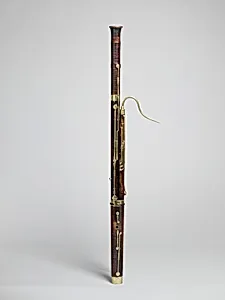
Medium
Maple, brass
Dimensions
Overall: 130 cm (51 3/16 in.)
Classification
Aerophone-Reed Vibrated-double reed
Culture
German
Department
Musical Instruments
Museum
Metropolitan Museum of Art, New York, NY
Credit
Purchase, Robert Alonzo Lehman Bequest, 2007
Accession Number
2007.80a–f
Rights
Public Domain
Art Historical Context
Step into the enchanting world of 19th-century music with this exquisite bassoon crafted by Carl August Schaufler, master instrument maker from Leipzig, Germany, between 1830 and 1832. Standing at an impressive 130 cm ( 51 inches), this-reed aerophone is fashioned from richly grained maple for its resonant body and gleaming brass for its intricate keywork, embodying the precision engineering of German craftsmanship during the early Romantic era. Schaufler's bassoons were renowned for their tonal warmth and technical innovation, reflecting advancements in woodwind design that allowed for greater chromatic flexibility and expressive range. At this time, orchestras were expanding, and instruments like this one supported the lush harmonies of composers such as Weber and early Mendelssohn, bridging Classical restraint with Romantic passion. The maple's acoustic properties enhance the bassoon's signature reedy timbre—mellow yet piercing—making it a staple in symphonic ensembles. Acquired by the Metropolitan Museum of Art through the Robert Alonzo Lehman Bequest in 2007, this bass not only showcases artisanal mastery but also preserves a slice of musical history, inviting visitors to imagine its vibrant echoes in Leipzig's concert halls two centuries ago.