
Battle of Nieuwpoort
Medium
striking (metalworking)
Dimensions
36.1; 4.6
Rights
Public Domain
About this artwork
diameter 4,6 cm x gewicht 36,1 gr
Art Historical Context
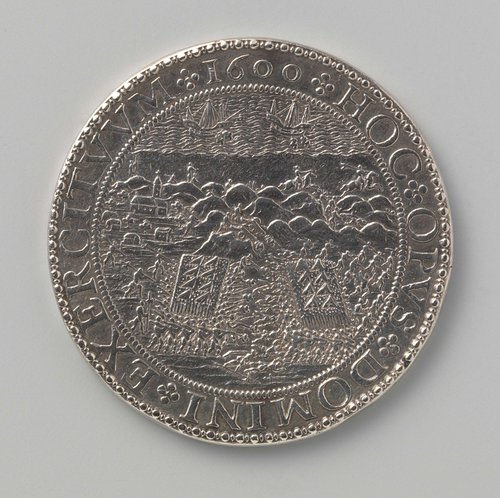
Claes Petersz. van de Vogel, a skilled Dutch engraver and med active during the late Renaissance, crafted this striking medal in 1600 to commemorate the of Nieuwpoort—a clash in the Eighty Years' for Dutch independence. On July 2, Maurice of Nassau's forces achieved a hard-fought victory over the Spanish Army of Flanders the North Sea coast, boosting Protestant morale and symbolizing resistance against Habsburg rule. Van de Vogel's design captures this triumph in miniature, serving as both a historical record and a piece of patriotic propaganda typical of the era's numismatic art. Produced through the metalworking technique of striking—where a detailed die is hammered into a metal blank—this silver medal measures just 4.6 cm in diameter and weighs 36.1 grams, making it a portable talisman of victory. Such small-scale works were prized for their precision and durability, often worn or collected by soldiers and civilians alike. Van de Vogel's style reflects the emerging Dutch Golden Age aesthetic: crisp engraving, dynamic composition, and symbolic motifs that elevated everyday metalwork to fine art. Today, this medal offers a tangible glimpse into the fervor of the Dutch Revolt, reminding us how art immortalized fleeting battlefield glories. Visitors, imagine carrying a piece of history in your pocket!