
Bead
Unknown Artist
ca. 3rd–7th century CE
Medium
Glass
Dimensions
Diam. 1.4 cm
Classification
Glass-Ornaments
Culture & Period
Sasanian · Sasanian
Department
Ancient Near Eastern Art
Museum
Metropolitan Museum of Art, New York, NY
Credit
Rogers Fund, 1934
Accession Number
34.107.120
Rights
Public Domain
Art Historical Context
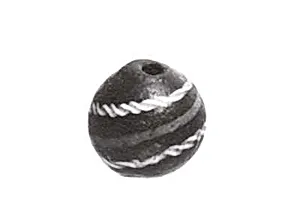
This petite glass bead, measuring just 1.4 cm in diameter, hails from the Sasanian Empireca. 3rd–7th CE), a powerhouse of ancient Persia that bridged the classical world and the dawn of Islam. Produced by an unknown artisan, it belongs to the vibrant world of Sasanian ornaments, where such beads adorned necklaces, bracelets, and amulets, reflecting everyday elegance amid grand imperial achievements in art and architecture. Glass was a prized medium in Sasanian culture, valued for its luminous colors and versatility. Artisans melted silica sands with fluxes to create these durable, tradeable gems, which circulated widely along Silk Road routes from Mesopotamia to India and beyond. This bead's survival speaks to the empire's sophisticated craftsmanship and its role in fostering cultural exchange. Today, in the Metropolitan Museum of Art's Ancient Near Eastern Art department—acquired via the Rogers Fund in 1934—it invites us to ponder the lives of ordinary people in a realm of kings and Zoroastrian splendor. A tiny treasure with timeless appeal!