
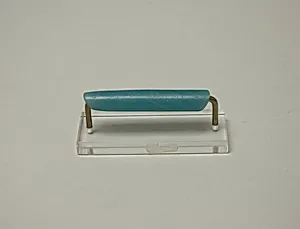
Bead
Unknown Artist
500 BCE–300 CE
Medium
Glass
Dimensions
H. 3/8 in. (1 cm); W. 3/8 in. (1 cm); L. 2 1/2 in. (6.4 cm)
Classification
Glass
Culture
Thailand
Department
Asian Art
Museum
Metropolitan Museum of Art, New York, NY
Credit
Gift of André Emmerich, 1988
Accession Number
1988.224.7
Rights
Public Domain
Art Historical Context
This delicate glass bead, hailing from ancient Thailand and dating to between 500 BCE 300 CE, offers a glimpse into the sophisticated craftsmanship of Southeast Asian cultures. Measuring just 3/8 inch in height and width but an impressive 2½ inches long, its slender, cylindrical form suggests it was part of a necklace, bracelet, or trade item. Crafted by an unknown artist, it now resides in the Metropolitan Museum Art's Asian Art department a generous gift from André Emmerich in 1988. Glassworking in ancient Thailand was a remarkable achievement, likely involving techniques like glass drawing or winding molten rods into precise shapes, then annealing for durability. During this era, spanning the late Iron Age to early historic periods, such beads were prized for jewelry and adornment, reflecting social status and cultural exchange. Thailand's position along ancient maritime trade routes connected it to glass production centers in India and beyond, making these objects symbols of far-reaching commerce. Though small, this bead embodies the ingenuity of pre-modern artisans, whose vibrant glasswork illuminated everyday life and rituals. Visitors can marvel at how such tiny treasures preserve stories of innovation and connectivity across millennia.