
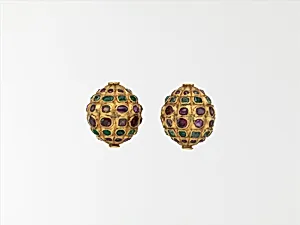
Bead, One of a Pair
Unknown Artist
18th century
Medium
Gold, emerald, ruby, and/or garnet
Dimensions
L. 1 in. (2.5 cm.) Diam. 13/16 in. (2.1 cm)
Classification
Jewelry
Department
Islamic Art
Museum
Metropolitan Museum of Art, New York, NY
Credit
Gift of Marguerite McBey, 1981
Accession Number
1981.5.18
Rights
Public Domain
Art Historical Context
This exquisite gold bead, one of a pair from the18th century, exemplifies opulent jewelry traditions of the Islamic world. Measuring just 1 inch in length and 13/ inch in diameter, its petite form belies its luxurious materials: gleaming gold set with vibrant emeralds, rubies, and/or garnets. Crafted with masterful precision, the bead showcases the era's advanced goldsmithing techniques, where gems were meticulously faceted and inset to catch the light, creating a dazzling play of color and sparkle. In the context of 18th-century Islamic art, such beads were likely components of elite necklaces, prayer strings (tasbih), or decorative adornments, symbolizing wealth, piety, and cultural refinement. Precious stones like emeralds from Colombia (via trade routes) and rubies from Burma were highly prized, reflecting the interconnected luxury trade networks spanning the Ottoman Empire, Persia, and Mughal India. These jewels not only served aesthetic purposes but also held talismanic significance, believed to offer protection and prosperity. Generously gifted to the Metropolitan Museum of Art by Marguerite McBey in 1981, this bead invites visitors to marvel at the enduring allure of Islamic craftsmanship. Though its maker remains unknown, it stands as a testament to the anonymous artisans whose skill elevated everyday objects into treasures.