
Beads
Unknown Artist
ca. 9th century BCE
Medium
Faience, Egyptian blue
Dimensions
13.86 x 12.13 x 8.39 in. (35.2 x 30.81 x 21.31 cm)
Classification
Faience-Ornaments
Culture & Period
Iran · Iron Age II, Hasanlu Period IV
Department
Ancient Near Eastern Art
Museum
Metropolitan Museum of Art, New York, NY
Credit
Purchase, Mrs. Constantine Sidamon-Eristoff Gift, 1961
Accession Number
61.100.121a–c
Rights
Public Domain
Art Historical Context
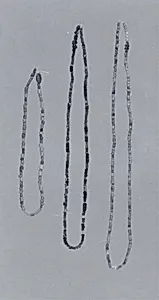
Step into the ancient world with *Beads*, a captivating collection of ornaments from Iron Age II Iran, dating to around the 9th BCE. Unearthed from the Hasanlu site during Period IV—a time of vibrant cultural flourishing in northwestern Iran—these beads reflect the sophistication of a society transitioning into the Iron Age. Now housed in the Metropolitan Museum Art's Department of Ancient Near Eastern Art they were acquired through a generous gift in 1961. Crafted from faience, a glazed ceramic material prized for its vivid luster, these beads shimmer in Egyptian blue—a groundbreaking synthetic pigment invented in ancient Egypt around 3000 BCE. This deep, sky-like hue, achieved through a complex firing process involving copper silicates, highlights advanced artisanal techniques and long-distance trade networks that carried Egyptian innovations across the Near East. Measuring about 14 x 12 x 8 inches, the ensemble likely formed jewelry or ritual adornments, their compact forms perfect for necklaces or amulets. These beads offer a window into Hasanlu's elite culture, where such luxuries symbolized status and possibly held protective or spiritual significance. Their survival through millennia speaks to the enduring allure of color and craftsmanship in the ancient world, inviting us to ponder the lives of those who once wore them.