
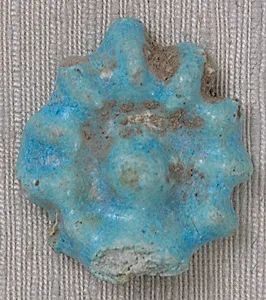
Beads
Unknown Artist
8th–13th century
Medium
Earthenware; glazed
Dimensions
Ht. 1 1/16 in. (2.7 cm) W. 1 in. (2.5 cm) D. 5/16 in. (0.8 cm)
Classification
Ceramics
Department
Islamic Art
Museum
Metropolitan Museum of Art, New York, NY
Credit
Rogers Fund, 1948
Accession Number
48.101.222.122
Rights
Public Domain
Art Historical Context
Nestled in the Metropolitan Museum of Art's Islamic collection, *Beads* is a example of earthenware craftsmanship from the 8th to 13th century—a vibrant era spanning the Abbasid Caliph and early medieval Islamic world. Crafted during a golden age of cultural exchange along trade routes like the Silk Road, these small glazed objects (just over 1 inch wide and high) were likely used in jewelry, amulets, or prayer strands, reflecting everyday artistry in regions from Iraq to Persia. The medium of glazed earthenware highlights innovative techniques of the time. Artisans applied a vitreous glaze over fired clay, creating a shiny, durable surface that protected against wear and allowed for vibrant colors—though specifics here evoke the subtle sheen typical of early Islamic ceramics. This method, perfected in the Islamic world, revolutionized pottery by making it waterproof and decorative, influencing global traditions. As part of the Rogers Fund acquisition in 1948, these beads offer a window into intimate aspects of medieval life: personal adornment, spirituality, and commerce. Though tiny, they embody the ingenuity of anonymous makers whose work adorned bodies and bridged cultures, inviting us to ponder the hands that strung them centuries ago.