
Beads
Unknown Artist
9th–12th century
Medium
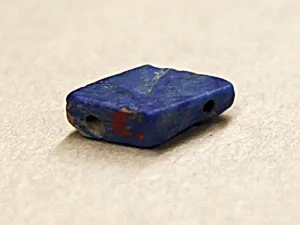
Lapis lazuli; cut
Dimensions
H. 7/16 in. (1.1 cm) W. 1/4 in. (0.7 cm) D. 1/8 in. (0.3 cm)
Classification
Stone
Department
Islamic Art
Museum
Metropolitan Museum of Art, New York, NY
Credit
Rogers Fund, 1948
Accession Number
48.101.69e
Rights
Public Domain
Art Historical Context
Nestled in the Metropolitan Museum of Art's Islamic collection, these delicate lapis lazuli beads, crafted by an unknown artist between the th and 12th centuries, exemplify the exquisite lapidary artistry of the medieval Islamic world. Measuring just a fraction of an inch—height 7/16 in. (11 cm), width 1/4 in. (0.7 cm), and 1/8 in. (0.3 cm)—they were meticulously cut from the prized deep-blue stone sourced primarily from Afghanistan's Badakhshan mines. Acquired through the Rogers Fund in 1948, these tiny treasures invite us to marvel at the precision required to shape such minuscule forms. Lapis lazuli held profound cultural significance in Islamic societies, symbolizing the heavens and divine beauty due to its vibrant ultramarine hue. Beads like these were likely strung into necklaces, prayer rosaries (tasbih), or amulets, blending everyday adornment with spiritual purpose. They reflect the era's thriving trade networks, which carried this "stone of heaven" across the Silk Roads from Central Asia to the Abbasid and Fatimid realms. The cutting technique highlights advanced stoneworking skills, where artisans transformed raw nodules into polished, uniform beads without modern tools. Though simple in form, these artifacts underscore the Islamic tradition of elevating humble objects through masterful craftsmanship, bridging utility and artistry in daily life.