
Beads
Unknown Artist
8th–13th century
Medium
Glass; drilled
Dimensions
H. 5/16 in. (0.8 cm) W. 5/16 in. (0.8 cm) L. 3/8 in. (0.9 cm)
Classification
Glass
Department
Islamic Art
Museum
Metropolitan Museum of Art, New York, NY
Credit
Rogers Fund, 1948
Accession Number
48.101.90d
Rights
Public Domain
Art Historical Context
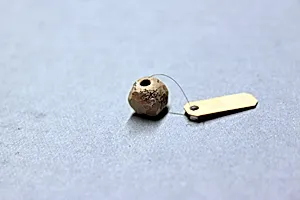
These petite glass beads, crafted by an unknown artist between the8th and 13th centuries, offer a glimpse into the everyday artistry of the Islamic world. Measuring a mere 5/16 inch (0.8 cm) in height and width, and 3/8 inch (0.9 cm) in length, they were expertly drilled through their centers, enabling them to be strung into necklaces, bracelets, or trims. Now housed in the Metropolitan Museum of Art's Department Islamic Art—acquired via the Rogers Fund in 1948—these tiny treasures showcase the precision and skill of medieval glassmakers. During this expansive period, which overlaps with the Abbasid Caliphate and regional dynasties, glass production flourished across the Islamic realm, from Mesopotamia to North Africa. Drilled glass beads like these were ubiquitous in trade networks, adorning everything from elite jewelry to amulets and horse trappings. Their translucent quality and uniform shape reflect advanced techniques in melting, shaping, and perforating glass, often using simple tools like bow drills. Though small, these beads hold immense cultural significance as artifacts of commerce and personal expression. They remind us how ordinary objects embodied the Islamic world's renowned craftsmanship, blending utility with subtle beauty in the rhythms of daily life.