
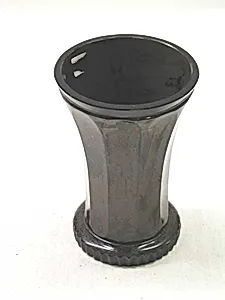
Beaker
Unknown Artist
ca. 1820–30
Medium
Glass
Dimensions
H. 5 5/8 in. (14.3 cm.)
Classification
Glass
Culture
Bohemian
Department
European Sculpture and Decorative Arts
Museum
Metropolitan Museum of Art, New York, NY
Credit
Gift of Zita Spiss, in memory of her father, Julius Triger, 1990
Accession Number
1990.328.42
Rights
Public Domain
Art Historical Context
This elegant Bohemian glass beaker, dating to around 1820–30, exemplifies the refined craftsmanship of Central Europe's premier glassmaking region during the Biedermeier period. at just 5⅝ inches tall, it served as a practical yet luxurious drinking vessel, reflecting the era's blend of functionality and understated neoclassical elegance. Produced in Bohemia (modern-day Czech Republic), a hub of glass innovation since the 17th century, such pieces were prized for their clarity, durability, and intricate surface treatments like wheel-cutting or engraving—techniques that caught the light to create sparkling facets. Bohemian glass dominated the 19th-century market, exported across Europe and beyond, symbolizing middle-class aspiration amid post-Napoleonic stability. Artisans in factories like those in Jablonec perfected lead crystal formulas, enabling delicate yet robust forms that rivaled fine porcelain. This beaker, now in The Metropolitan Museum of Art's European Sculpture and Decorative Arts collection (gift of Zita Spiss in memory of her father, Julius Triger, 1990), highlights how everyday objects became art through masterful technique. Visitors, imagine sipping from this at a Viennese salon—its subtle sheen whispering of Bohemia's glassy legacy, a testament to anonymous makers who elevated the ordinary to the extraordinary.