
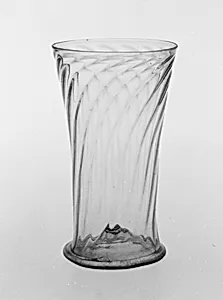
Beaker
Unknown Artist
17th century
Medium
Colorless (slightly purplish gray) nonlead glass. Blown, pattern molded.
Dimensions
H. 26.4 cm
Classification
Glass
Culture
Northern European (probably Germany)
Department
Robert Lehman Collection
Museum
Metropolitan Museum of Art, New York, NY
Credit
Robert Lehman Collection, 1975
Accession Number
1975.1.1219
Rights
Public Domain
Art Historical Context
This elegant 17th-century beaker from Northern Europe, likely Germany, stands as a fine example of early modern glassmaking craftsmanship. Crafted from colorless yet slightly purplish graylead glass, it measures 26.4 cm in height—tall and stately for a drinking vessel of its time. Housed in the Robert Lehman Collection at The Metropolitan Museum of Art since 1975, it the region's burgeoning glass industry, which rivaled Italian innovations during the Baroque era. The beaker was created using blown and pattern-molded techniques, hallmarks of Northern European glassworkers. Molten glass was first blown into a mold engraved with intricate patterns, imparting textured motifs to the surface before being further shaped and annealed. This method allowed for affordable yet decorative production, distinct from the clearer lead crystal that would later dominate. The subtle purplish tint, common in potash-lime glasses due to natural impurities, adds a soft, atmospheric hue evocative of the period's aesthetic. In a culture where fine glassware symbolized prosperity and hospitality, such beakers graced banquets and homes of the elite. This piece invites us to appreciate the anonymous artisan's skill, bridging everyday utility with artistic refinement in 17th-century Europe.