
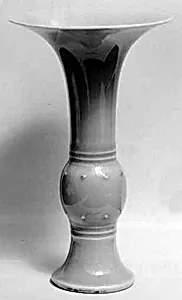
Beaker
Unknown Artist
Medium
Porcelain with clair de lune glaze
Dimensions
H. 7 3/8 in. (18.7 cm)
Classification
Ceramics
Culture & Period
China · Qing dynasty (1644–1911), Kangxi mark and period (1662–1722)
Department
Asian Art
Museum
Metropolitan Museum of Art, New York, NY
Credit
The Friedsam Collection, Bequest of Michael Friedsam, 1931
Accession Number
32.100.439
Rights
Public Domain
Art Historical Context
This elegant porcelain beaker from China's Qing dynasty exemplifies the pinnacle of Kangxi-period ceramics (1662–1722). Standing at 7 3/8 inches tall, it features a signature *clair de lune* glaze soft, moonlit blue that evokes serene night skies. Named for its luminous, celestial hue ("clair de lune" in French), this glaze was perfected at the imperial kilns in Jingdez during Emperor Kangxi's reign, golden era of technical innovation and artistic refinement. The beaker bears a Kangxi mark, authenticating its origin and prestige. Porcelain like this was fired at extraordinarily high temperatures, allowing the glaze to flow subtly from deeper blue at the base to a delicate pale rim, showcasing masterful control over materials and kilns. Beakers served both practical and ceremonial purposes, often holding wine or tea in elite households, and their export via the Silk Road spread Chinese artistry worldwide. Now part of The Friedsam Collection at The Metropolitan Museum of Art, this piece invites us to appreciate the Qing dynasty's blend of subtlety and splendor, where everyday objects became timeless treasures.