
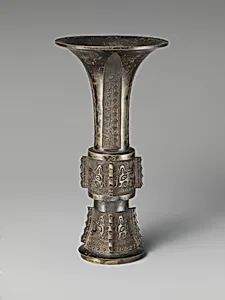
고 중국 청|銅製觚 中國 淸|Beaker of archaistic design
Unknown Artist
18th–19th century
Medium
Bronze
Dimensions
H. 8 1/4 in. (21 cm); Diam. of rim 4 1/8 in. (10.5 cm); Diam. of foot 2 1/2 in. (6.4 cm)
Classification
Metalwork
Culture & Period
China · Qing dynasty (1644–1911)
Department
Asian Art
Museum
Metropolitan Museum of Art, New York, NY
Credit
Bequest of John L. Cadwalader, 1914
Accession Number
14.58.175
Rights
Public Domain
Art Historical Context
This elegant bronze beaker, known as a *gu* (觚), hails from China's Qing dynasty (16441911), crafted in 18th or 19th century. Standing just over 8 inches tall with a flared rim and slender foot, it exemplifies refined metalwork designed for ritual wine vessels in ancient ceremonies. Though produced centuries later, its archaistic style deliberately echoes the ornate bronzes of the Shang (c. 1600–1046 BCE) and Zhou (6–256 BCE) dynasties, featuring motifs like taotie masks or cloud patterns that evoke antiquity. Qing artisans mastered bronze casting techniques—likely using the traditional piece-mold method—to replicate the patina and intricate reliefs of millennia-old vessels. Emperors like Qianlong were passionate collectors of such archaistic pieces, commissioning them for imperial altars, scholarly studios, and gardens to honor China's venerable past. This revival bridged dynasties, blending technical prowess with cultural reverence. Bequeathed to the Metropolitan Museum of Art in 1914 by John L. Cadwalader, this beaker invites visitors to ponder the Qing elite's fascination with history. Its subtle green patina whispers of rituals long past, a testament to bronze's enduring role in Chinese art.