
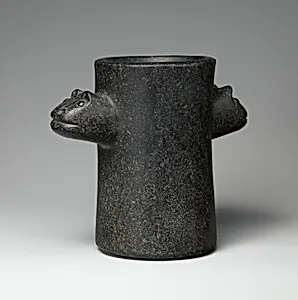
Beaker with animal heads
500 BCE–500 CE
Medium
Stone
Dimensions
H. 8 × W. 9 × D. 5 1/2 in. (20.3 × 22.9 × 14 cm)
Classification
Stone-Vessels
Culture
Condorhuasi-Alamito
Department
Arts of Africa, Oceania, and the Americas
Museum
Metropolitan Museum of Art, New York, NY
Credit
Gift of Claudia Quentin, 2016
Accession Number
2016.734.6
Rights
Public Domain
Tags
Art Historical Context
This striking stone beaker, crafted by Condorhuasi-Alamito artists from ancient northwestern Argentina between 500 BCE and 500 CE, exemplifies the ingenuity of pre-Columbian cultures. Measuring about 8 inches tall, this vessel from the Formative period was likely used for rituals or daily ceremonies, its durable stone medium—probably local hardstone like basalt or andesite—ensuring longevity. The Condorhuasi-Alito peoples, known from sites in the Catamarca region, mastered stone carving to create functional yet symbolic objects, blending utility with spiritual expression. The beaker's most captivating feature is its protruding animal heads, rendered in low relief around the rim and body. These motifs, possibly depicting llamas, condors, or mythical creatures central to Andean cosmology, suggest a deep connection to the natural world and animal spirits. Such iconography reflects the culture's animistic beliefs, where animals served as intermediaries between humans and the divine, often linked to fertility rites or shamanic practices. Today, this rare artifact, a 2016 gift to the Metropolitan Museum of Art, offers a window into the sophisticated artistry of a lesser-known Andean tradition, highlighting how everyday objects became vessels of cultural identity and cosmic meaning.