
Beam
Unknown Artist
15th–17th Century
Medium
Wood
Dimensions
13 ft. × 9 in. × 9 in. (396.2 × 22.9 × 22.9 cm)
Classification
Woodwork-Architectural
Culture
European
Department
The Cloisters
Museum
Metropolitan Museum of Art, New York, NY
Credit
Gift of Mrs. Robert W. deForest, 1932
Accession Number
X.198.1
Rights
Public Domain
Tags
Art Historical Context
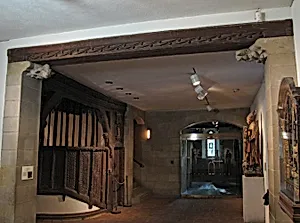
Nestled in The Cloisters collection at the Metropolitan Museum of Art, *Beam* is a striking example of European architectural woodwork from the15th to 17th century. Carved from sturdy wood, impressive structural element measures 13 feet long and 9 inches square, suggesting it once supported the roof or ceiling of a grand medieval or early modern building—perhaps a hall, church, or manor house. Its robust dimensions highlight the engineering prowess required to span wide spaces in an era before steel, blending functionality with the era's architectural ambition. Though the artist remains unknown, the beam embodies the craftsmanship of late Gothic and Renaissance Europe, where woodworkers transformed raw timber into enduring supports often adorned with subtle carvings (though specifics here are unadorned in record). Acquired as a gift from Mrs. Robert W. deForest in 1932, it evokes the timber-framed structures that defined daily life and grandeur across the continent, from England to the Continent. Today, *Beam* invites visitors to ponder the hidden artistry in everyday architecture, a testament to centuries-old traditions preserved for modern eyes in The Cloisters' evocative medieval setting.