
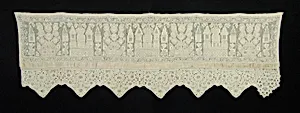
Bed curtain border
Unknown Artist
1800–1850
Medium
Linen, silk
Dimensions
72 x 23 1/2 in. (182.9 x 59.7 cm)
Classification
Textiles-Laces
Culture
Russian
Department
European Sculpture and Decorative Arts
Museum
Metropolitan Museum of Art, New York, NY
Credit
Brooklyn Museum Costume Collection at The Metropolitan Museum of Art, Gift of the Brooklyn Museum, 2009; Gift of Mrs. Edward S. Harkness in memory of her mother, Elizabeth Greenman Stillman, 1931
Accession Number
2009.300.6339
Rights
Public Domain
Art Historical Context
This exquisite bed curtain border, crafted by an unknown Russian artist between 1800 and 1850, exemplifies the refined artistry of 19th-century Russian lacework. Made from delicate linen and silk threads, this textile measures an impressive 72 by 23½ inches, designed as an elegant edging to adorn luxurious bed hangings in affluent homes. Its classification as a lace places it within the rich tradition of European decorative arts, where such pieces transformed everyday furnishings into statements of sophistication and status. In the context of early 19th-century Russia, borders like this one reflected a blend of folk craftsmanship and neoclassical influences, often produced in convents or by skilled home workers. The use of fine silk and linen highlights advanced needle or bobbin techniques, creating intricate patterns that caught the light and added texture to opulent interiors. These textiles were not mere decorations but symbols of cultural refinement, showcasing Russia's growing textile industry amid imperial expansion. Now part of The Metropolitan Museum of Art's collection—originally from the Brooklyn Museum Costume Collection—this rare survivor offers a glimpse into private domestic life. Visitors can appreciate how such laces elevated the bedroom from functional space to a realm of quiet elegance.