
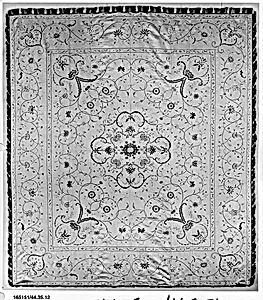
Bedcover
Unknown Artist
late 18th–early 19th century
Medium
Silk; on silk
Dimensions
100 x 88 in. (254 x 223.52 cm)
Classification
Textiles-Embroidered
Culture & Period
China · Qing dynasty (1644–1911)
Department
Asian Art
Museum
Metropolitan Museum of Art, New York, NY
Credit
Gift of Susan Dwight Bliss, 1944
Accession Number
44.35.12
Rights
Public Domain
Art Historical Context
This magnificent bedcover, crafted in China during the late 18 to early 19th under the Qing dynasty (164–1911), exemplifies era's mastery of silk embroidery. Measuring an impressive 100 x 88 inches (254 x 223.52 cm), it was created using silk threads on a silk ground—a luxurious medium reserved for elite households. Embroidered textiles like this were labor-intensive works of art, often produced by skilled artisans who employed intricate techniques such as satin stitch and padding to achieve rich texture and depth. In Qing China, such bedcovers held profound cultural significance as symbols of prosperity and marital harmony. They were typically part of bridal trousseaus or opulent bedroom furnishings, adorning the kang (heated brick bed platform) common in northern homes. The dynasty's opulent aesthetic, influenced by imperial patronage, elevated embroidery to a high art form, blending functionality with decorative splendor. Today, this rare piece graces the Metropolitan Museum of Art's Asian Art Department, a generous gift from Susan Dwight Bliss in 1944. It invites visitors to appreciate the enduring elegance of Chinese textile traditions and the anonymous genius behind them.