
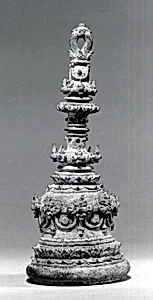
Bell
Unknown Artist
10th–11th century
Medium
Bronze
Dimensions
H. 6 5/16 in. (16 cm)
Classification
Metalwork
Culture & Period
Indonesia (Java) · Eastern Javanese period
Department
Asian Art
Museum
Metropolitan Museum of Art, New York, NY
Credit
Samuel Eilenberg Collection, Gift of Samuel Eilenberg, 1987
Accession Number
1987.142.241
Rights
Public Domain
Art Historical Context
This exquisite bronze bell, crafted in Java, Indonesia, during the Eastern Javan period (10th–th century), offers a into the island's rich artistic heritage. Dating to a time when Hindu-Buddhist kingdoms, producing monumental temples like Borobudur and Prambanan, this small handbell (just 6 5/16 inches high) reflects the era's mastery of metalwork. Likely used in rituals or ceremonies, it embodies the spiritual and cultural life of ancient Javanese society, where such objects played key roles in religious practices. Bronze, a prized medium in Southeast Asian art, was cast using advanced lost-wax techniques, allowing for intricate details and durability. Though the artist remains unknown, the bell's survival highlights the enduring quality of Javanese craftsmanship, which blended local ingenuity with influences from India and China. Today, housed in the Metropolitan Museum of Art's Asian Art Department as part of the Samuel Eilenberg Collection, it invites visitors to ponder the sacred sounds that once resonated through Java's temple complexes, connecting us to a vibrant past.