
Bell
1711
Medium
casting
Dimensions
15; 3; 15.6
Rights
Public Domain
About this artwork
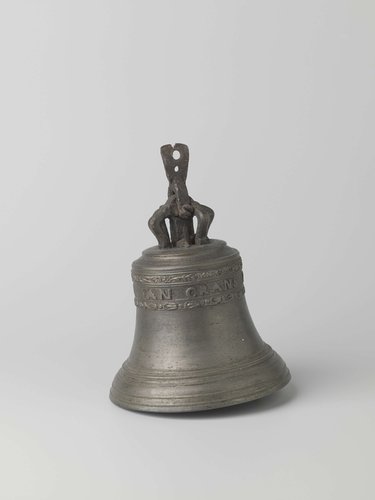
Het gegoten voorwerp bestaat uit de eigenlijke klok en de zesarmige kroon, waarvan één arm is afgebroken, een ijzeren klepel aan een oog en een bevestigingsstuk op de kroon. Deze laatste drie onderdelen zijn van ijzer. Bovenaan het tussen twee sierringen geplaatste opschrift: IAN CRANS ME FECIT AO 1711.
Art Historical Context
Nestled among our collection of finely crafted metalwork is this petite bell, masterfully created by Jan Crans in 1711. Standing just 15.6 cm high with a diameter of 15 cm and weighing 3 kg, it exemplifies the precision of early 18th-century casting techniques. The bell comprises a resonant cast body topped by a six-armed crown—though one arm is now broken—paired with an iron clapper suspended from an eye and a sturdy iron mounting piece. Delicately inscribed between two decorative rings at the top are the words "IAN CRANS ME FECIT AO 1711," a traditional Latin maker's mark proudly declaring, "Jan Crans made me in the year 1711." As a product of the Baroque era's skilled foundries, likely in the Low Countries where such artisans thrived, this bell highlights the artistry of bell-casting. The process involved pouring molten bell metal (typically a bronze alloy) into meticulously prepared molds, ensuring both durability and a clear, pure tone essential for signaling hours, calls to worship, or community events. Its compact size suggests use as a handbell or for a small chapel, blending functionality with ornamental flair in the crown's elegant arms. Though modest in scale, this piece offers a window into everyday material culture, where metalworkers like Crans elevated utilitarian objects into enduring symbols of craftsmanship and timekeeping. A testament to longevity, it invites us to imagine the echoes it once produced across centuries past.