
Bellows
Unknown Artist
first quarter 16th century
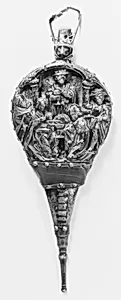
Medium
Oak
Dimensions
24-3/4 x 9-1/2 x 3 in. (62.9 x 24.1 x 7.6 cm)
Classification
Woodwork-Furniture
Culture
German
Department
European Sculpture and Decorative Arts
Museum
Metropolitan Museum of Art, New York, NY
Credit
Gift of Irwin Untermyer, 1964
Accession Number
64.101.1225
Rights
Public Domain
Tags
Art Historical Context
Step into the cozy hearths of early 16th-century Germany this remarkable oak bellows, a functional yet artistic household essential from the first quarter of the 1500s. Measuring 24-3/4 x 9-1/2 x 3 inches, this German woodwork object—now housed in the Metropolitan Museum Art's European Sculpture andative Arts department—was ingeniously crafted to fan flames in fireplaces. Donated by Irwin Untermyer in 4, it exemplifies how everyday tools were transformed into objects of beauty and devotion. The bellows bears a tag linking it to the Nativity, suggesting intricate carvings depicting the birth of Christ—a popular motif in Northern Renaissance Germany. During this era, the Protestant Reformation was stirring, yet Catholic iconography persisted in domestic arts, blending piety with practicality. Oak, a sturdy and abundant wood, was ideal for such durable pieces, allowing skilled artisans to showcase fine relief carving techniques that brought biblical scenes to life amid the rhythm of daily chores. This unassuming bellows highlights the cultural fusion of utility and spirituality in pre-Reformation German homes. It invites us to appreciate how anonymous craftsmen elevated simple furniture into sculptural treasures, preserving faith through the warmth of the fireside.