
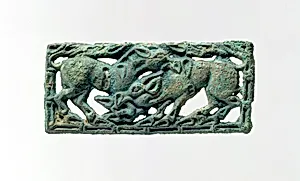
Belt Plaque with Fighting Stallions
Unknown Artist
2nd century BCE
Medium
Bronze
Dimensions
H. 2 1/4 in. (5.7 cm); W. 5 in. (12.7 cm)
Classification
Metalwork
Culture
Southern Siberia
Department
Asian Art
Museum
Metropolitan Museum of Art, New York, NY
Credit
Gift of Mr. and Mrs. Eugene V. Thaw, 2002
Accession Number
2002.201.121
Rights
Public Domain
Tags
Art Historical Context
This exquisite bronze belt plaque from Southern Siberia, dating to the 2nd BCE, captures the raw energy of two fighting stallions locked in combat. Measuring just 2¼ inches high and 5 inches wide, this small yet powerful metalwork ornament would have adorned a warrior's, serving as both a practical accessory and a badge of status. Crafted by an unknown artist, its dynamic composition—rearing horses with arched necks and flailing hooves—evokes the untamed spirit of the Eurasian steppes. In the nomadic cultures of Southern Siberia, horses were central to life, symbolizing speed, power, and martial prowess. Such plaques, classified as metalwork in the Asian Art collection at The Metropolitan Museum of Art, reflect advanced bronze-casting techniques that allowed for intricate detailing on a miniature scale. The "animal style" motif, common in steppe art, emphasized motion and vitality, possibly warding off evil or celebrating heroic deeds. Gifted to the Met by Mr. and Mrs. Eugene V. Thaw in 2002, this plaque offers a window into ancient pastoral societies, reminding us how everyday objects carried profound cultural weight. Visitors, take a moment to admire the timeless drama etched in bronze!