
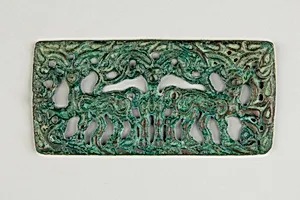
Belt Plaque with Three Ibex
Unknown Artist
2nd–1st century BCE
Medium
Bronze
Dimensions
H. 2 5/8 in. (6.7 cm); W. 5 1/2 in. (13.9 cm)
Classification
Metalwork
Culture
Northwest China
Department
Asian Art
Museum
Metropolitan Museum of Art, New York, NY
Credit
Gift of Mr. and Mrs. Eugene V. Thaw, 2002
Accession Number
2002.201.116
Rights
Public Domain
Tags
Art Historical Context
This exquisite bronze belt plaque, *Belt Plaque with Ibex*, hails from Northwest China and dates to the 2–1st century BCE Measuring just 2 5/8 inches high and 5 1/2 inches wide, this delicate metalwork piece was likely worn as a decorative ornament on a belt, a common accessory among nomadic elites of ancient steppe cultures. Crafted by an unknown artist, it showcases three graceful ibex—mountain goats renowned for their agility—captured in dynamic poses that evoke the rugged landscapes of the region. The plaque's significance lies in its masterful bronze casting technique, a hallmark of early metalworking in Central Asia. Such plaques were status symbols, adorning the belts of warriors or chieftains, and reflect the cultural exchanges along proto-Silk Road trade routes. Ibex motifs, symbolizing endurance and the wild, appear frequently in artifacts from this era, linking Northwest China's nomadic traditions to broader Eurasian artistic influences during the late Warring States to early Han periods. Today, this treasure resides in the Metropolitan Museum of Art's Asian Art Department, a generous gift from Mr. and Mrs. Eugene V. Thaw in 2002. It offers a glimpse into the vibrant world of ancient pastoralists, where artistry met everyday life.