
Belt Plate Fragment
Unknown Artist
4th–7th century
Medium
Iron, silver inlay
Dimensions
Overall: 1 15/16 x 1 3/4 x 1/4 in. (4.9 x 4.5 x 0.6 cm)
Classification
Metalwork-Iron
Culture
Frankish
Department
Medieval Art
Museum
Metropolitan Museum of Art, New York, NY
Credit
Museum Accession
Accession Number
X.209.11
Rights
Public Domain
Art Historical Context
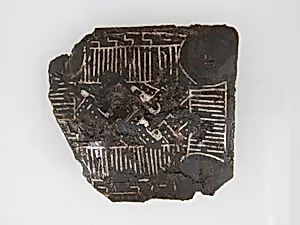
This delicate *Belt Plate Fragment from the Frankish culture, dating to the 4th–7th century, offers a glimpse into the early Medieval world of the Merovingian Franks, who rose to prominence in what is now and Germany during the turbulent Migration Period. Measuring just under 2 inches across, this small iron piece—likely part of a warrior's or elite's belt buckle or fitting—survives as a testament to everyday luxury amid a time of tribal migrations, conquests, and the dawn of feudal society. Belts like this held swords, pouches, or cloaks, symbolizing status and readiness for battle. Crafted from iron with intricate silver inlay, the fragment showcases advanced metalworking techniques of the era. The silver, a precious import, was meticulously hammered or fused into incised iron patterns, creating shimmering contrasts that elevated humble iron into ornamental art. Such inlays, akin to early damascening, highlight Frankish artisans' skill in blending utility with decoration, often seen in grave goods that reveal social hierarchies. Housed in the Metropolitan Museum of Art's Medieval Art Department, this unassuming relic underscores the Franks' cultural fusion of Germanic traditions and Roman influences, paving the way for Carolingian splendor. Though fragmented, it whispers of lives long past—ambitious chieftains striding through misty forests, their belts gleaming under the sun.