
Bes Amulet
Unknown Artist
ca. 1550–1295 B.C.
Medium
Faience
Dimensions
H. 2.4 × W. 1.2 × Th. 0.5 cm (15/16 × 1/2 × 3/16 in.)
Classification
Amulet, Bes
Period
New Kingdom
Department
Egyptian Art
Museum
Metropolitan Museum of Art, New York, NY
Credit
Gift of Albert M. Lythgoe, 1917
Accession Number
17.6.130
Rights
Public Domain
Tags
Art Historical Context
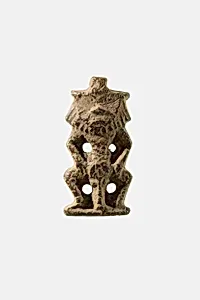
Nestled in the Egyptian Art collection at the Metropolitan Museum of Art, this *Bes Amulet* (ca. 1550–1295 B.C.) the New Kingdom's masterful miniature artistry. Crafted from faience—a glazed, colorful ceramic mimicking lapis lazuli or turquoise—this 2.4 cm tall talisman was produced during Dynasty 18, a golden age of Egyptian power and innovation under pharaohs like Hatshepsut and Tutankhamun. Its vibrant blue-green hue and compact form (H. 2.4 × W. 1.2 × Th. 0.5 cm) made it ideal for personal wear or household use. Bes, the amulet's subject, was a beloved household deity depicted as a grinning, pot-bellied dwarf with leonine features, often brandishing knives or making funny faces to scare away evil. In ancient Egyptian culture, he held immense protective significance, especially for women in childbirth, children, and against supernatural threats like snakes or demons. Faience amulets like this were mass-produced yet intricately molded, blending artistry with everyday magic. A generous 1917 gift from Albert M. Lythgoe, this piece reveals how New Kingdom Egyptians infused spirituality into daily life, turning small objects into powerful guardians. It invites us to imagine ancient families clutching such charms for comfort and safety.