
Biface, commonly referred to as a hand ax
Unknown Artist
ca. 400,000–240,000 B.C.
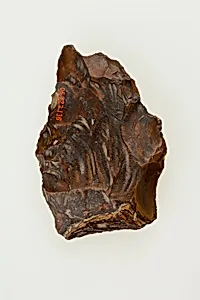
Medium
Flint
Dimensions
L. 9.6 × W. 6.5 × Th. 1.9 cm, Wt. 122.7g (3 13/16 × 2 9/16 × 3/4 in., 4.328oz.)
Classification
Tool, biface, hand ax, sub-cordiform
Period
Lower Paleolithic Period
Department
Egyptian Art
Museum
Metropolitan Museum of Art, New York, NY
Credit
Gift of C. T. Currelly, 1906
Accession Number
06.322.136
Rights
Public Domain
About this artwork
Biface, commonly referred to as a hand ax is a work from Lower Paleolithic Period, Upper Egypt, Thebes, dated to ca. 400,000–240,000 B.C.. The work was created using flint. It measures L. 9.6 × W. 6.5 × Th. 1.9 cm, Wt. 122.7g (3 13/16 × 2 9/16 × 3/4 in., 4.328oz.). This piece represents the artistic traditions of Lower Paleolithic Period, Upper Egypt, Thebes, embodying the aesthetic values and technical expertise of its makers. This work exemplifies the artistic achievements of its period and cu...