
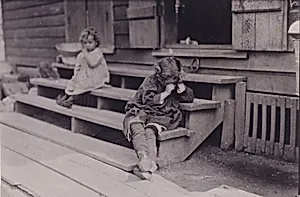
Biloxi, Mississippi
ca. 1925
Medium
Photography-Photoprint
Classification
Photography-Photoprint
Department
Smithsonian Collection
Museum
Smithsonian American Art Museum
Credit
Smithsonian American Art Museum, Museum purchase from the Charles Isaacs Collection made possible in part by the Luisita L. and Franz H. Denghausen Endowment
Accession Number
1994.91.80
Rights
Public Domain
Tags
Art Historical Context
**Biloxi, Mississippi** (ca. 1925) is a poignant photoprint by Lewis W. Hine, a pioneering American photographer whose lens captured the human stories behind social issues. Hine, best known for groundbreaking documentary work exposing child labor abuses in the early 1900s, shifted his focus in the 1920s to everyday life in America. This image, featuring children on weathered stairs in the coastal Mississippi town of Biloxi, his enduring commitment to revealing the textures of working-class existence. Taken around 1925, the photograph embodies the era's transitional spirit—just before the Great Depression—highlighting the simple, resilient lives of Southern children amid Biloxi's fishing and oyster industries. Hine's photoprint technique, using gelatin silver prints for sharp detail and tonal depth, lends a timeless intimacy, drawing viewers into the scene's quiet narrative. The composition's focus on stairs and young figures evokes both play and precariousness, a hallmark of his empathetic realism. Acquired by the Smithsonian American Art Museum through a generous purchase from the Charles Isaacs Collection, this work underscores photography's power as social testimony. It invites us to ponder the unvarnished joys and challenges of 1920s America, preserving a slice of Biloxi's vibrant, overlooked history.