
Bird-cage cup
1662–1722
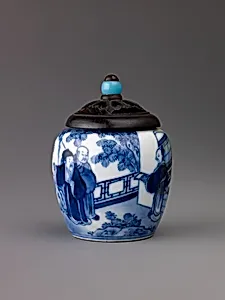
Medium
Porcelain painted in underglaze blue.
Dimensions
Height: 2 in. (5 cm.)
Classification
Ceramics
Culture
Chinese
Department
Robert Lehman Collection
Museum
Metropolitan Museum of Art, New York, NY
Credit
Robert Lehman Collection, 1975
Accession Number
1975.1.1743
Rights
Public Domain
Tags
Art Historical Context
Nestled in the Robert Lehman Collection at the Metropolitan Museum of Art, the *Bird-cage Cup* is a delicate gem of Qing dynasty porcelain from the Kangxi period (1662–1722). Standing just 2 inches (5 cm) tall, this diminutive cup exemplifies the exquisite craftsmanship of Chinese ceramic artists at Jingdezhen, the imperial kilns renowned for their technical mastery. Painted in vibrant underglaze blue—a where cobalt pigment is applied to the unfired clay body before a transparent glaze is added and the piece is fired at high temperatures—this ware achieves its iconic deep blue hue, prized for its durability and luminosity. Produced during a golden age of porcelain export, when Chinese blue-and-white ceramics captivated European collectors, the cup's bird-cage motif likely evokes themes of nature and confinement, common in decorative arts of the era. The underglaze method, perfected over centuries since the Ming dynasty, allowed intricate designs to emerge boldly through the glaze, showcasing the potters' precision on such a tiny scale. Tags noting "Men" may hint at figurative elements, perhaps scholars or figures interacting with the cage, reflecting Confucian ideals of harmony. This intimate vessel, acquired in 1975, invites visitors to marvel at how everyday objects became high art, bridging East and West in the 17th–18th centuries and embodying China's enduring ceramic legacy.
About the Artist
Chinese
The artist known simply as "Chinese" in museum records represents the vast tradition of anonymous or unattributed masters in Chinese art history, with 99 works preserved in our collection. These pieces exemplify the enduring legacy of guó huà, or traditional Chinese painting, one of the world's oldest continuous artistic practices. Early life is not well documented, as is common for many practitio...