
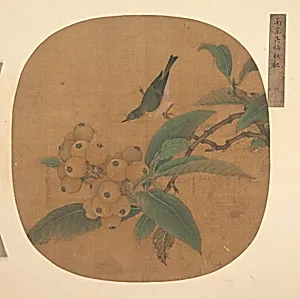
明 佚名 (舊傳)吳炳 枇杷 扇|Bird on a Loquat Tree
Medium
Fan mounted as an album leaf; ink and color on silk
Dimensions
10 1/2 x 10 3/4 in. (26.7 x 27.3 cm)
Classification
Paintings
Culture & Period
China · probably mid- to late Ming dynasty (1368–1644)
Department
Asian Art
Museum
Metropolitan Museum of Art, New York, NY
Credit
John Stewart Kennedy Fund, 1913
Accession Number
13.100.99
Rights
Public Domain
Tags
Art Historical Context
This delicate fan painting, titled *Bird on a Loquat Tree*, dates to China’s Ming dynasty, most likely the mid- to late 16th or early 17th century. in ink and color on silk, the work was originally designed as a functional folding fan before being carefully mounted as an album leaf for preservation—a common practice that allowed such intimate objects to be enjoyed as art rather than discarded when the fan wore out. Although once attributed to the Song-dynasty master Wu Bing, scholars now regard the artist as unidentified, reflecting the many anonymous yet highly skilled painters active during the Ming period. The composition centers on a small bird perched among the broad leaves and ripening fruit of a loquat tree, a motif that evokes the quiet beauty of the natural world. Ming artists often chose such subjects to suggest seasonal change and the harmony between living creatures and their environment. The fan format itself adds historical charm: these portable paintings were popular among scholars and officials, who carried them as both practical items and expressions of refined taste. Today housed in the Metropolitan Museum of Art’s Asian Art collection, the piece offers visitors a glimpse into the everyday elegance of Ming material culture and the enduring appeal of nature imagery in Chinese painting.