
Bird Plaque Ornament
Unknown Artist
3rd century BCE–2nd century CE
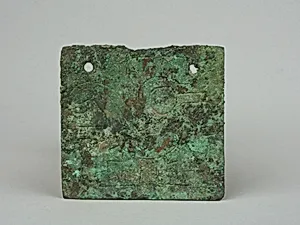
Medium
Copper, gilt
Dimensions
H. 2 x W. 2 in. (5 x 5 cm)
Classification
Metal-Ornaments
Culture
Vicús
Department
Arts of Africa, Oceania, and the Americas
Museum
Metropolitan Museum of Art, New York, NY
Credit
Bequest of Jane Costello Goldberg, from the Collection of Arnold I. Goldberg, 1986
Accession Number
1987.394.354
Rights
Public Domain
Tags
Art Historical Context
This exquisite Bird Plaque Ornamentails from the Vicús culture of ancient Peru, thriving in the northern coastal region from around 1000 BCE to 200 CE. Dating to the 3rd century BCE–nd century CE, this copper plaque, measuring just 2 x 2 inches (5 x 5 cm), exemplifies Vicús mastery of metallurgy during a time when intricate metalwork symbolized status, spirituality, and connection to the natural world. Likely worn as a personal adornment or affixed to clothing, it reflects the Vicús people's sophisticated craftsmanship in the pre-Incan Andes. Crafted from copper and enhanced with gilding—a technique of applying a thin layer of gold to the base metal—the ornament gleams with a luxurious shine that would have caught the light in ancient rituals or daily life. This depletion gilding process, common in early Andean workshops, involved heating and treating the alloy to enrich the gold surface, showcasing advanced technical skill for its era. The bird motif, a recurring theme in Vicús art, may evoke mythical creatures or deities linked to the sky, fertility, and the cosmos. Today, this treasure resides in the Metropolitan Museum of Art's Department of Arts of Africa, Oceania, and the Americas, a bequest from Jane Costello Goldberg in 1986. It invites us to ponder the artistry of a vanished world, where even tiny objects carried profound cultural weight.