
Bird Plaque Ornament
Unknown Artist
3rd century BCE–2nd century CE
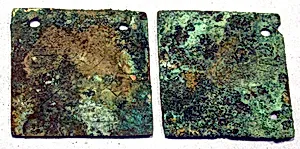
Medium
Copper, gilt
Dimensions
H. 2 x W. 2 in. (5 x 5 cm)
Classification
Metal-Ornaments
Culture
Vicús
Department
Arts of Africa, Oceania, and the Americas
Museum
Metropolitan Museum of Art, New York, NY
Credit
Bequest of Jane Costello Goldberg, from the Collection of Arnold I. Goldberg, 1986
Accession Number
1987.394.365
Rights
Public Domain
Art Historical Context
This exquisite *Bird Plaque Ornament hails from the Vicús culture of ancient Peru, thriving along the northern coast between the 3rd century BCE and 2nd century CE. The Vicús people, skilled artisans in pre-Inca Andean societies, crafted such small treasures amid a vibrant era of regional trade and ritual practices. Measuring just 2 x 2 inches (5 x 5 cm), this delicate piece likely served as personal adornment—perhaps pinned to clothing or sewn onto textiles—evoking the natural world in a society where birds symbolized messengers between earth and sky. Forged from copper and enhanced with gilding, the ornament showcases Vicús mastery of metallurgy. Artisans hammered the thin copper sheet into a stylized bird form, then applied a thin gold layer through techniques like depletion gilding or mercury amalgamation, creating a luminous contrast that mimicked feathers in sunlight. This fusion of humble copper with precious gold highlights the culture's innovative alloying and surface treatments, elevating everyday metalwork to objects of status and spirituality. Today, this rare survivor graces the Metropolitan Museum of Art's Arts of Africa, Oceania, and the Americas department, thanks to the 1986 bequest of Jane Costello Goldberg from the Arnold I. Goldberg Collection. It offers a glimpse into Vicús artistry, bridging the gap to later Andean masterpieces like those of the Moche.