
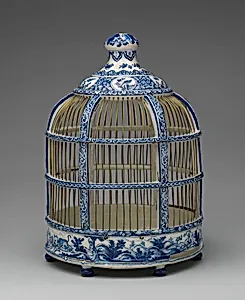
Birdcage
Unknown Artist
first half 18th century
Medium
Tin-glazed earthenware
Dimensions
16 1/2 × 11 in. (41.9 × 27.9 cm)
Classification
Ceramics-Pottery
Culture
Dutch, Delft
Department
European Sculpture and Decorative Arts
Museum
Metropolitan Museum of Art, New York, NY
Credit
Gift of Henry G. Marquand, 1894
Accession Number
94.4.103
Rights
Public Domain
Art Historical Context
Step into the whimsical world of 18th-century Dutch ceramics with *Birdcage*, a delightful tin-glazed earthenware from Delft, created in the first half of 1700s. Measuring 16½ × 11 inches, this piece depicts a fanciful birdcage adorned with human figures and trees blending the everyday with the fantastical. Produced in the renowned potteries of Delft, it exemplifies the ingenuity of European artisans who crafted affordable luxury for homes. Tin-glazing, the hallmark technique of Delftware, involved coating earthenware with a tin oxide layer to create a smooth, opaque white surface ideal for vibrant hand-painted designs in blue, manganese purple, and other colors. This method allowed Delft potters to mimic costly Chinese porcelain while infusing their work with local flair—think playful scenes evoking gardens or domestic idylls. *Birdcage* captures this spirit, transforming a simple household object into a sculptural conversation piece. Housed in The Metropolitan Museum of Art's European Sculpture and Decorative Arts department since Henry G. Marquand's 1894 gift, it highlights Delft's golden age of ceramics, when the city rivaled global porcelain producers. A testament to 18th-century delight in the miniature and surreal, this piece invites visitors to ponder the lively imaginations behind everyday elegance.