
Bishop
Unknown Artist
early 14th century
Medium
Limestone
Dimensions
Overall: 88 1/2 in. (224.8 cm)
Classification
Sculpture
Culture
French
Department
The Cloisters
Museum
Metropolitan Museum of Art, New York, NY
Credit
The Cloisters Collection, 1947
Accession Number
47.101.14
Rights
Public Domain
Tags
Art Historical Context
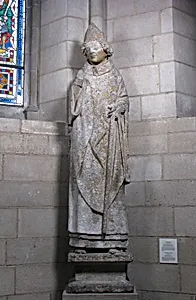
This imposing limestone sculpture of a *Bishop*, created by an unknown French artist in early 14th century stands an impressive 88½ inches tall, capturing the solemn dignity of a medieval church figure. Carved from durable limestone—a favored medium for Gothic-era sculptures due to its workability and availability in northern France—the piece exemplifies the period's emphasis on monumental stonework. Likely intended for a cathedral portal, tomb, or ecclesiastical setting, its life-sized scale draws visitors into the hierarchical world of the medieval clergy. Dating to the height of French Gothic art, around 1300–1320, the sculpture reflects the era's artistic focus on elongated proportions, intricate drapery, and expressive faces that conveyed spiritual authority. Bishops, as powerful intermediaries between heaven and earth, were frequent subjects in religious architecture, symbolizing piety and patronage. The detailed rendering of vestments and posture highlights the sculptor's mastery of volume and light, techniques honed in workshops near major Gothic cathedrals like Chartres or Amiens. Now a highlight in The Cloisters at the Metropolitan Museum of Art (The Cloisters Collection, 1947), this work immerses visitors in the devotional culture of medieval Europe, where art served both worship and wonder. Its preservation offers a tangible link to a time when stone figures like this bishop guided the faithful toward the divine.