
Bishop
c. 1520
Medium
oak
Dimensions
115; 26; 36
Rights
Public Domain
About this artwork
eikenhout
Art Historical Context
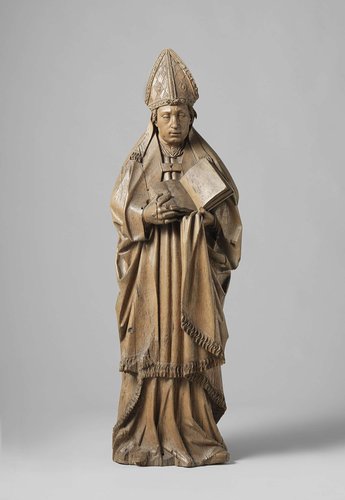
**Bishop** by Henrik Douverman, around 1520 from a single block of oak, stands at an impressive 115 cm tall, embodying the masterful Late Gothic sculpture of the Northern Renaissance. Douverman, a prolific Dutch artist active in the Low Countries, specialized in wooden religious figures for churches, often depicting saints and clergy with lifelike detail. This sculpture captures a bishop in ecclesiastical robes, likely intended for an altar or niche in a cathedral, reflecting the era's devotion to Catholic hierarchy amid brewing Reformation tensions. Oak, or *eikenhout* in Dutch, was the ideal medium for such works—durable, readily available, and capable of fine carving that reveals intricate folds, expressive faces, and symbolic gestures. Douverman's technique showcases a transition from rigid Gothic forms to more naturalistic Renaissance poses, with polished surfaces that would have gleamed under candlelight in dimly lit naves. Its slender proportions (36 cm wide, 26 cm deep) suggest it was designed for architectural integration, enhancing worshippers' spiritual immersion. This piece highlights the cultural role of sculpture in 16th-century Netherlands, where art reinforced faith and community identity. Today, it offers a tangible link to medieval piety, inviting us to ponder the bishop's serene authority in a world of change. (198 words)